




Description
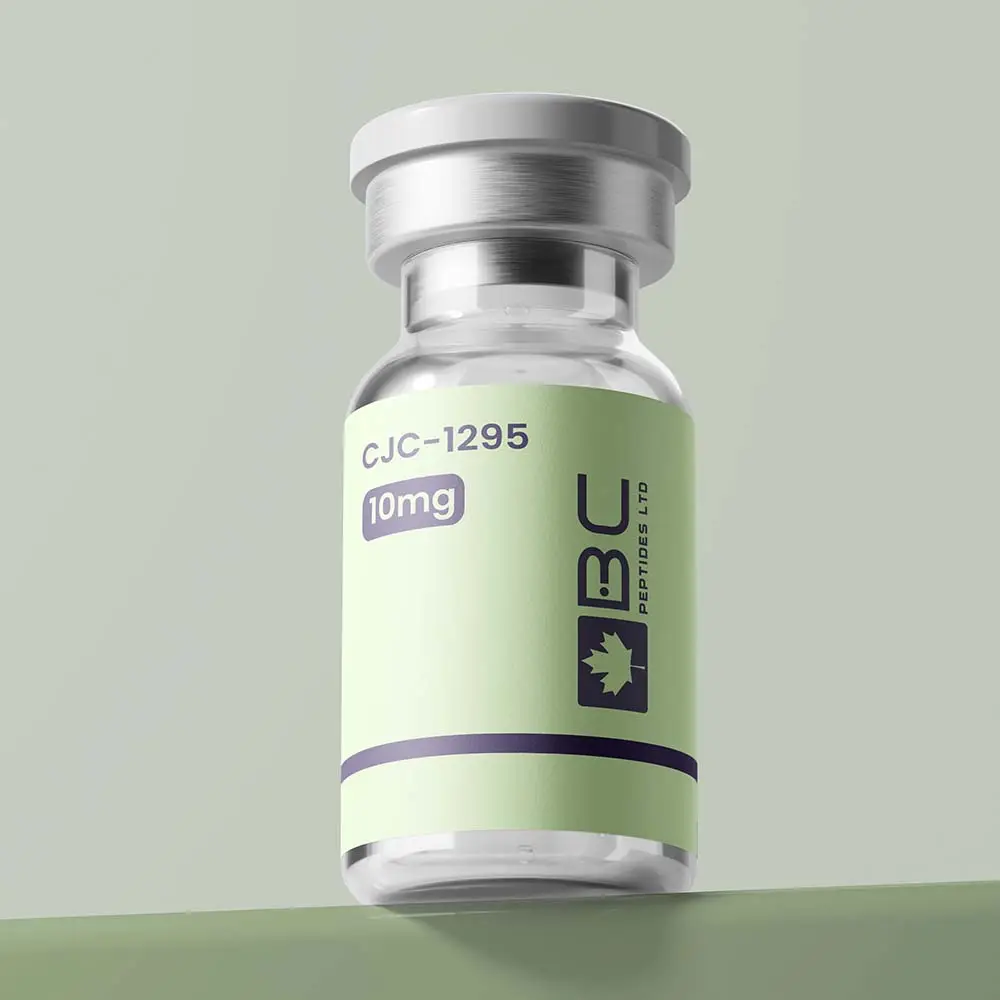
CJC-1295 (No DAC)—also known as Modified GRF (1-29) or Tetrasubstituted GRF (1-29)—focuses on its role as a synthetic analogue of Growth Hormone-Releasing Hormone (GHRH).
Technically, it is a 29-amino acid peptide that represents the biologically active “truncated” portion of the naturally occurring 44-amino acid GHRH molecule.
1. Molecular Structure and Engineering
Native GHRH (1-29) has an extremely short half-life in the human body (less than 5 minutes) because it is rapidly cleaved by the enzyme Dipeptidyl Peptidase-4 (DPP-4).
To create CJC-1295 (No DAC), scientists modified four specific amino acids in the sequence to enhance its metabolic stability while maintaining its affinity for the GHRH receptor:
- Position 2 (Ala → D-Ala): Protects the peptide from DPP-4 cleavage.
- Position 8 (Asn → Gln): Prevents spontaneous deamidation (breakdown).
- Position 15 (Gly → Ala): Enhances biological activity and binding affinity.
- Position 27 (Met → Leu): Prevents oxidation of the methionine residue.
These substitutions extend the half-life from ~5 minutes to approximately 30 minutes, allowing it to effectively signal the pituitary gland before being cleared.
2. Mechanism of Action (MOA)
CJC-1295 (No DAC) acts as a specific GHRH receptor agonist. Once administered, it binds to the GHRH receptors located on the somatotroph cells in the anterior pituitary gland.
- cAMP Pathway Activation: Binding triggers a G-protein coupled reaction that stimulates adenylate cyclase, increasing intracellular levels of cyclic AMP (cAMP).
- Calcium Influx: The rise in cAMP opens voltage-dependent calcium channels, leading to an influx of Calcium+.
- Exocytosis: This calcium spike triggers the regulated release (exocytosis) of stored Growth Hormone (GH) vesicles into the bloodstream.
- Pulsatile Release: Because of its relatively short half-life, CJC-1295 (No DAC) preserves the natural pulsatile nature of GH release, rather than creating a constant “bleed” of hormone.
3. Pharmacokinetics and Stability
The “No DAC” designation is critical. Unlike its counterpart (CJC-1295 with DAC), it does not contain a Drug Affinity Complex.
| Feature | CJC-1295 (No DAC) | CJC-1295 (with DAC) |
| Half-Life | ~30 Minutes | 6–8 Days |
| Binding | Free Peptide | Reversible Albumin Binding |
| Release Pattern | Pulsatile (Discrete spikes) | Continuous (Elevated baseline) |
| Clearance | Rapid Renal/Proteolytic | Slow Renal Clearance |
4. Biological Effects and Synergy
In clinical research, CJC-1295 (No DAC) is primarily studied for its ability to:
- Stimulate IGF-1 Production: Increased GH levels signal the liver to produce Insulin-like Growth Factor 1 (IGF-1), the primary mediator of muscle growth and cellular repair.
- Promote Lipolysis: GH increases the breakdown of triglycerides into free fatty acids for energy.
- Enhance Protein Synthesis: Supports the repair of connective tissues and skeletal muscle.
5. Safety and Research Status
While widely used in biochemical research, CJC-1295 (No DAC) is not FDA-approved for human use. Observed side effects in research settings typically involve:
- Vasodilation: A temporary “flushing” sensation due to rapid GH release.
- Pituitary Sensitivity: High doses can lead to temporary desensitization of the somatotrophs, which is why researchers often use a “5 days on / 2 days off” protocol