





Description
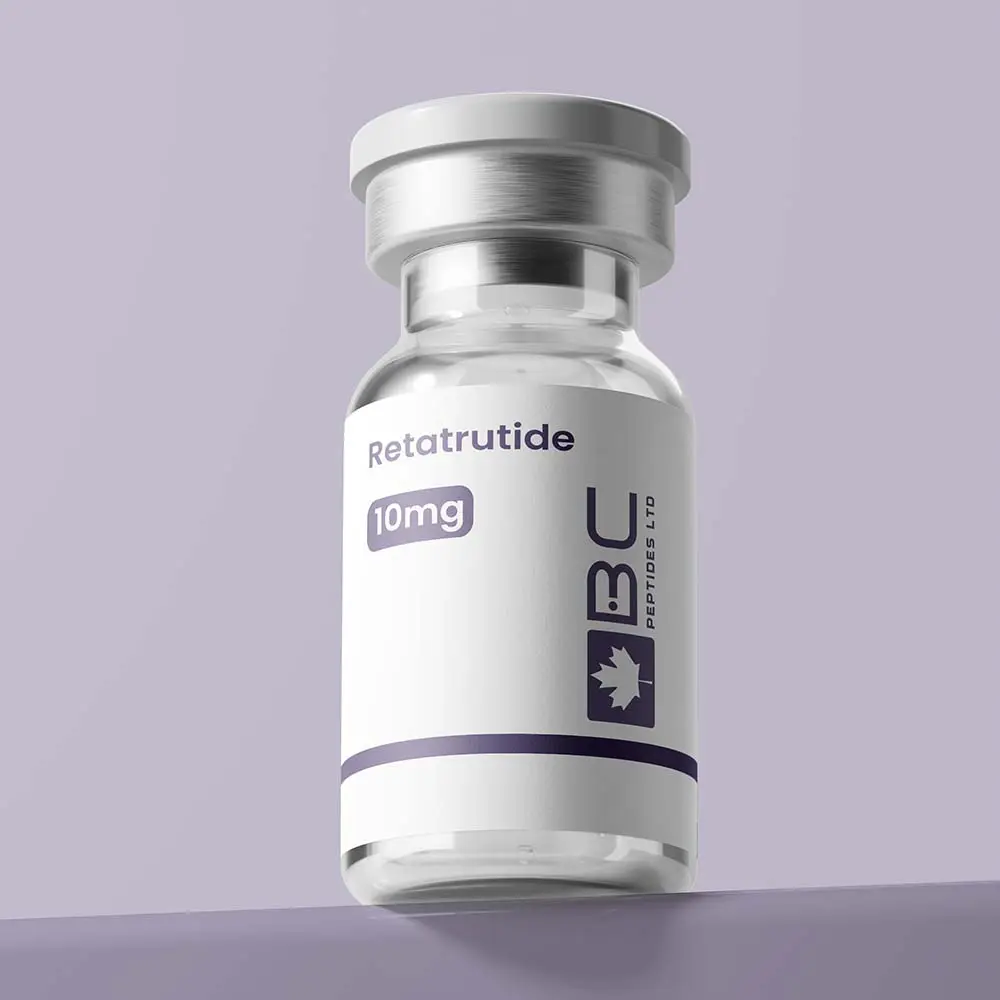
Retatrutide is a first-in-class, unimolecular triple hormone receptor agonist. It is a synthetic 39-amino acid peptide engineered to target the glucagon-like peptide-1 (GLP-1), glucose-dependent insulinotropic polypeptide (GIP), and glucagon (GCG) receptors.
By integrating these three distinct metabolic pathways into a single molecule, Retatrutide achieves a “triple-action” effect on energy balance, insulin sensitivity, and lipid metabolism.
1. Molecular Engineering and Structure
Retatrutide is a backbone-modified peptide based primarily on the native GIP sequence. To achieve its multi-receptor affinity and extended duration of action, several critical structural modifications were implemented:
- Amino Acid Substitutions: Specific residues were replaced with non-proteogenic amino acids, such as alpha-aminoisobutyric acid (Aib) at position 2. This modification provides steric hindrance against dipeptidyl peptidase-4 (DPP-4), the primary enzyme responsible for the rapid degradation of incretin hormones.
- C20 Fatty Diacid Conjugation: A 20-carbon fatty diacid moiety is attached to a lysine residue at position 17 via a specialized linker. This allows the peptide to bind reversibly to serum albumin, extending its human half-life to approximately 6 days and enabling once-weekly subcutaneous administration.
- Chimeric Sequence: The peptide sequence is “chimeric,” meaning it incorporates elements of GLP-1 and Glucagon into the GIP framework to ensure high-affinity binding across all three G-protein coupled receptors (GPCRs).
2. Triple Agonist Mechanism of Action (MOA)
The pharmacological profile of Retatrutide is defined by its balanced agonism, which targets three distinct regulatory pathways:
A. GIP Receptor Agonism (The “Incretin” Foundation)
Retatrutide acts as a full agonist at the GIP receptor. GIP is responsible for a significant portion of the “incretin effect” (insulin secretion following a meal). In white adipose tissue, GIP agonism is believed to improve lipid buffering and insulin sensitivity, potentially mitigating the pro-inflammatory state of obesity.
B. GLP-1 Receptor Agonism (Appetite & Satiety)
It acts as a partial agonist at the GLP-1 receptor. By targeting the arcuate nucleus of the hypothalamus, it increases satiety and reduces “food noise.” It also contributes to delayed gastric emptying, though its dual/triple nature may allow for high efficacy with potentially fewer gastrointestinal side effects than pure GLP-1 agonists.
C. Glucagon Receptor Agonism (Energy Expenditure)
This is the “third pillar” that distinguishes Retatrutide from Tirzepatide. Glucagon receptor activation increases energy expenditure via thermogenesis and directly stimulates lipolysis (the breakdown of fats) in the liver. This component is specifically designed to combat metabolic dysfunction-associated steatotic liver disease (MASLD).
3. Pharmacodynamics and Clinical Efficacy
In Phase 2 clinical trials, Retatrutide demonstrated the most significant weight loss ever recorded for a pharmacological agent in a similar timeframe:
| Metric | Phase 2 Clinical Observation (at 48 weeks) |
| Mean Weight Loss | ~24.2% (at the 12mg dose) |
| Hepatosteatosis | Up to 90% reduction in liver fat for many participants |
| Glucose Control | Significant reductions in HbA1c and fasting insulin |
| Lipid Profile | Marked decreases in triglycerides and LDL cholesterol |
4. Pharmacokinetics (PK) Summary
- Peak Concentration: Peak plasma concentrations are reached roughly 24 to 72 hours after subcutaneous injection.
- Metabolism: Like other therapeutic peptides, it is cleared via proteolytic degradation of the peptide backbone and beta-oxidation of the fatty acid side chain.
- Half-Life: ~144 hours (6 days), supporting a steady-state concentration with weekly dosing.
5. Research Status and Safety
Retatrutide is currently in Phase 3 clinical trials (the TRIUMPH program). While its safety profile is largely consistent with other incretin mimetics (nausea, diarrhea), the glucagon component introduces a unique observation: a dose-dependent, transient increase in resting heart rate, which typically peaks around week 24 before declining.