

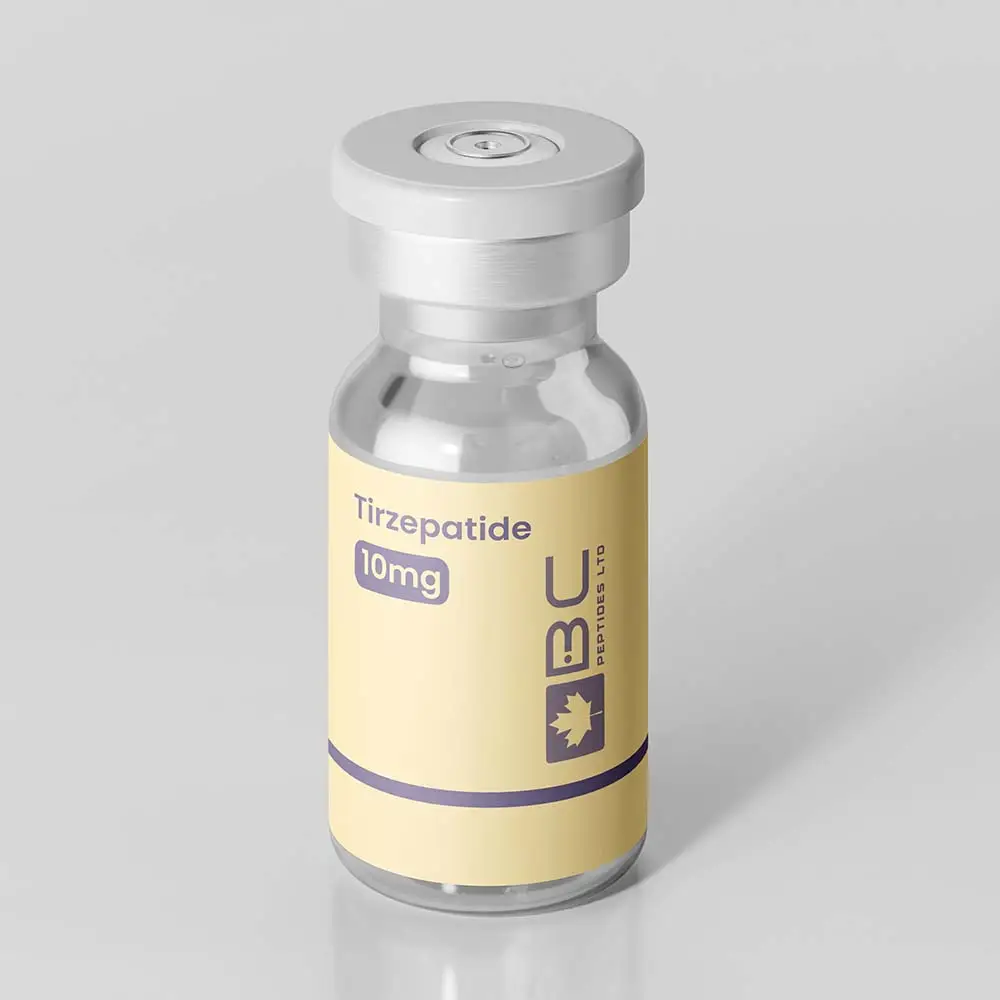



Description
Tirzepatide is a synthetic 39-amino acid linear peptide. Its structure is primarily based on the native GIP (Glucose-dependent Insulinotropic Polypeptide) sequence, but it is engineered with specific modifications to also act as an agonist for the GLP-1 (Glucagon-Like Peptide-1) receptor.
Key structural features include:
- C20 Fatty Diacid Moiety: Attached via a linker, this allows the molecule to bind to albumin, extending its half-life to approximately 5 days.
- Aib Substitutions: The inclusion of alpha-amino isobutyric acid at specific positions protects the peptide from rapid enzymatic degradation by DPP-4.
Dual Mechanism of Action (MOA)
Unlike Semaglutide, which is a selective GLP-1 agonist, Tirzepatide utilizes a synergistic “dual-agonist” approach:
GIP Receptor Agonism:
- In the Pancreas: GIP is the primary incretin hormone. Tirzepatide’s action here is significantly stronger than its GLP-1 action, stimulating insulin secretion in a glucose-dependent manner.
- In Adipose Tissue: It is believed to improve lipid buffering and increase insulin sensitivity within fat cells, potentially reducing systemic inflammation.
GLP-1 Receptor Agonism:
- In the Brain: Targets the hypothalamus to suppress appetite and increase satiety.
- In the Gut: Attenuates gastric motility (slowing stomach emptying), though research suggests this effect may be slightly less pronounced than with high-dose pure GLP-1 agonists.
Pharmacodynamics and Clinical Efficacy
Tirzepatide is indicated for Type 2 Diabetes (as Mounjaro) and chronic weight management (as Zepbound). It has also received FDA approval for treating moderate-to-severe Obstructive Sleep Apnea (OSA) in patients with obesity.
| Metric | Clinical Observation (SURMOUNT/SURPASS Trials) |
| Weight Reduction | Up to 20.9% – 22.5% total body weight loss at 72 weeks (15mg dose). |
| Glycemic Control | Reductions in $HbA1c$ by up to 2.4%. |
| Insulin Sensitivity | Significant improvements in HOMA2-IR and adiponectin levels. |
| Cardiovascular | Reductions in systolic blood pressure and improvements in lipid profiles (LDL and triglycerides). |
Pharmacokinetics (PK) Summary
- Bioavailability: Approximately 80% following subcutaneous injection.
- Peak Plasma Concentration: Reached between 8 to 72 hours.
- Elimination: Primarily via proteolytic cleavage of the peptide backbone and $\beta$-oxidation of the fatty acid side chain.
- Excretion: Metabolites are cleared through both urine and feces.
Safety and Contraindications
Tirzepatide shares the boxed warning common to incretin mimetics regarding Thyroid C-cell tumors, observed in rodent studies. It is contraindicated in patients with a personal or family history of Medullary Thyroid Carcinoma (MTC) or Multiple Endocrine Neoplasia syndrome type 2 (MEN 2).